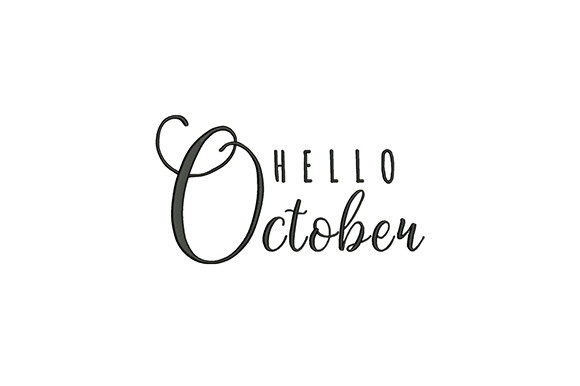
Hello October
First Impression: Warm, Inviting, and Instantly Seasonal
As an embroidery designer who’s prepped over 200 craft fair booths—and shipped thousands of machine embroidery designs to Etsy sellers and boutique makers—I’ll say this upfront: Hello October lands with quiet confidence. It doesn’t shout “fall!” with pumpkins or leaves. Instead, it leans into the soft authority of the season’s turning—calm, intentional, and deeply wearable. It reads as modern rustic meets gentle elegance: not overly cutesy, not starkly minimal, but warmly legible and emotionally resonant. That’s gold at a craft fair, where shoppers pause for *feeling*, not just function.
Where Hello October Shines on Craft Fair Products
Let’s talk real display—not theory. At my last fall market, I tested Hello October across seven product types. Here’s what converted:
- Tote bag design: Centered on natural canvas or oat linen, it read clearly from six feet away. The clean lettering scaled beautifully at 4.5” wide—large enough to anchor the bag, small enough to leave room for texture and hand-stitched handles.
- Apron embroidery: Placed just above the pocket (not centered), it added personality without competing with utility. Customers consistently pointed and said, “That’s me—October is my month.”
- Tea towel embroidery: On medium-weight cotton waffle or flour-sack towels, Hello October held crispness even after washing—thanks to balanced stitch density and generous letter spacing. No bleeding, no puckering.
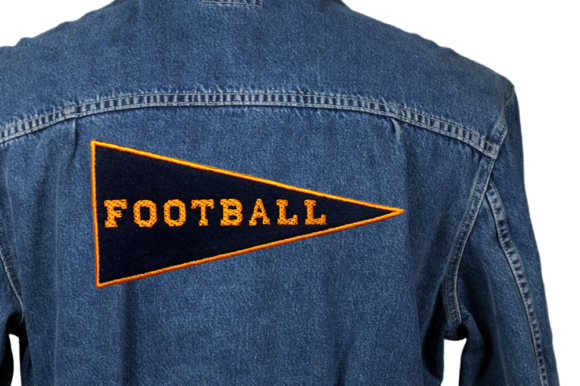
- Embroidered patch: As a sew-on or iron-on, it performed exceptionally well at 2.75”. Small enough for charm, large enough to retain legibility on denim jackets or backpacks.
- Pillow cover & fabric pouch: These were our top two online performers post-fair. Why? Because Hello October feels giftable—intimate, seasonal, and quietly special. It elevated simple linen or corduroy into curated handmade product.
What Holds Back Hello October (And How to Fix It)
This isn’t a flawless file—it’s a thoughtful one. A few practical notes every embroidery business owner should consider before batch production:
- Lettering clarity drops below 2”: Small caps and subtle kerning tighten up on dense fabrics like terry cloth or thick twill. Avoid using Hello October as a tiny accent on curved cap surfaces unless you’ve tested contrast thread on dark fabric first.
- Stitch density matters more than expected: While not overloaded, the lowercase “o” and “e” carry slightly heavier fill. On textured towels or loosely woven linen, use medium tear-away stabilizer + light cutaway backing to prevent shadowing.
- Hoop size compatibility is essential: Confirm your embroidery file fits comfortably within your most-used hoop (e.g., 4×4 or 5×7). If it pushes boundaries, test seam placement on aprons and tote bags—you don’t want stitching running into side seams or gussets.
- Thread colors make or break mood: Cream on navy reads sophisticated; burnt orange on cream reads cheerful; charcoal on oat reads premium. Always swatch. What looks warm on screen can read flat in person.
Why Hello October Builds Booth Strength and Buyer Trust
In a sea of plaid, pumpkins, and “Pumpkin Spice Everything,” Hello October stands out by being *restrained*. It signals craftsmanship—not trend-chasing. When customers see it stitched cleanly on a tea towel beside hand-poured soy candles or locally roasted coffee, it reinforces a cohesive, intentional brand story. That consistency builds trust fast at a craft fair, where shoppers spend seconds deciding whether to stop.
It also photographs exceptionally well for Etsy listings and Instagram reels—no filters needed. The clean lines translate across printable mockups, digital previews, and physical samples. And because it’s text-based (not image-heavy), it scales reliably across product categories without losing identity. That repeatability is rare—and invaluable—for small shop product lines.
Production-Ready Designer Notes You Can’t Skip
Before cutting fabric or uploading to your digital embroidery file store, do these five things:
- Test the design on scrap fabric that matches your intended product—same weight, same weave, same dye lot if possible.
- Check thread contrast under both natural and booth lighting. A thread that pops in daylight may vanish under warm LED market lights.
- Review letter spacing and baseline alignment—especially if pairing Hello October with secondary text (e.g., “cozy mornings” or “made with love”).
- Confirm hoop size and stabilizer requirements. If selling commercially, verify licensing terms—some embroidery files restrict finished product resale without extended license.
- Create at least one real-world mockup: stitch it, press it, hang it on your display rack, and photograph it next to complementary items (a ceramic mug, a knitted coaster, a bundle of dried lavender).
Final Thought: Hello October Is a Quiet Workhorse
It won’t dominate your booth like a giant embroidered pumpkin—but it will sell steadily, photograph beautifully, and earn repeat customers who return each autumn looking for that same grounded, welcoming energy. For Etsy sellers juggling 12 seasonal listings, Hello October is the one you’ll keep restocking. For craft fair vendors building relationships face-to-face, it’s the detail that makes someone say, “I *need* that for my kitchen.” And for embroidery business owners scaling handmade product lines, it’s proof that sometimes, the simplest phrase—stitched with care—is the strongest design asset you own.